

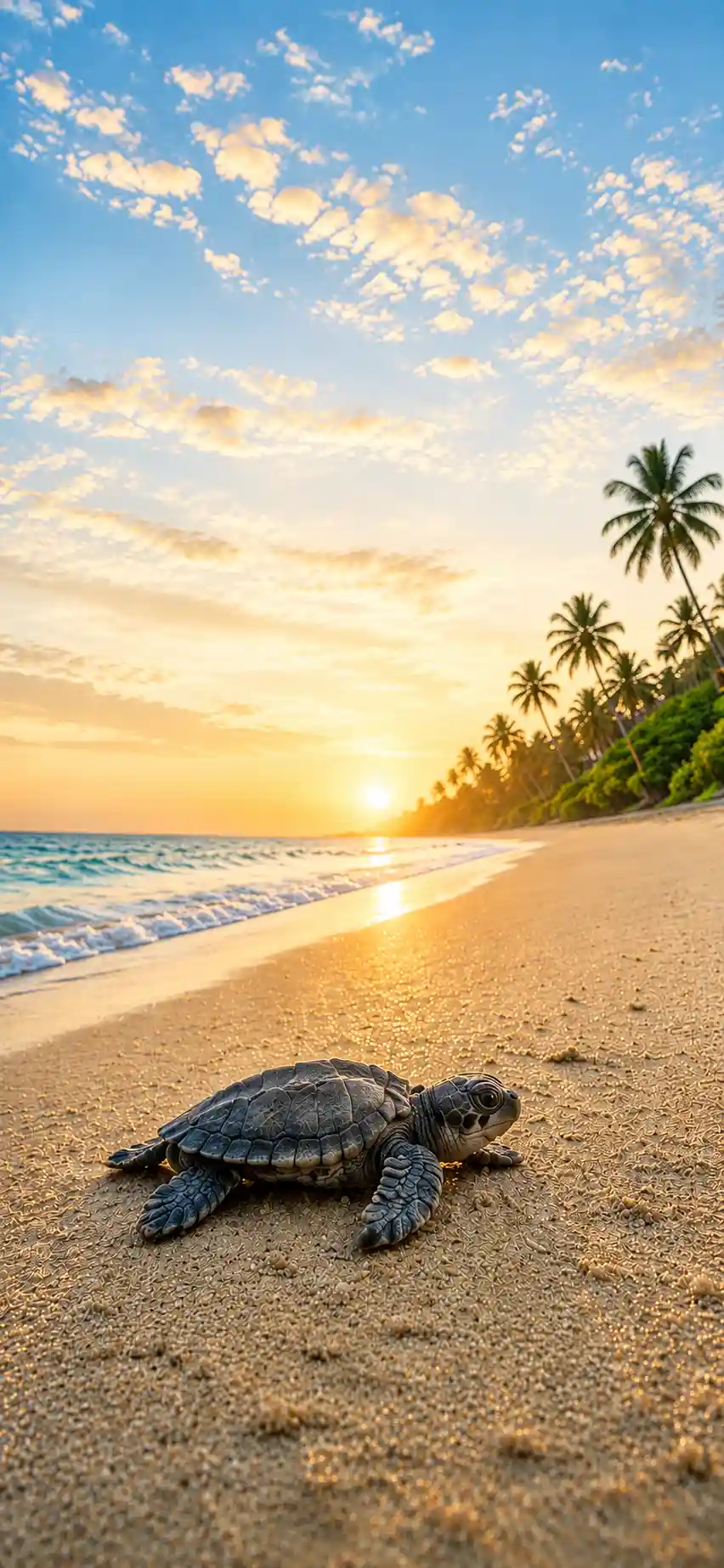
Spend one to eighteen weeks volunteering with endangered sea turtles on the shores of Sri Lanka. Real work, real impact, real community — and a gap year story you’ll still be telling thirty years from now.
Programme Duration: 1–18 Weeks
From: €150 per week
Volunteers: 30+ Countries Represented
What’s In This Guide
- Why Choose Conservation for Your Gap Year?
- Why Sri Lanka?
- Why Sea Turtles Specifically?
- What You’ll Do Every Day
- How You Grow Week by Week
- Real Costs — Full Breakdown
- The CV & University Benefits
- The Social Side
- Exploring Sri Lanka in Your Free Time
- Gap Year FAQs
A gap year is one of the most valuable investments you can make in yourself—but only if you spend it doing something that genuinely challenges and changes you.
Travelling between beach bars and hostels has its place, but more and more young people are looking for gap year experiences with substance: experiences that build real skills, expose them to realities beyond their own, and leave them knowing they contributed something meaningful to the world.
Sea turtle volunteering in Sri Lanka offers exactly that.
Why Choose Conservation for Your Gap Year?
The gap year has evolved considerably over the past two decades. What was once seen primarily as a year of travel and self-discovery has increasingly become an opportunity for young people to develop professionally, personally, and ethically.
University admissions tutors, graduate employers, and scholarship committees have all recognised that meaningful gap year experiences demonstrating initiative, commitment, and purpose carry far greater value than simple travel alone.
Conservation volunteering sits at the top of that spectrum.
It requires you to:
- Wake up early and work hard.
- Adapt to warm and sometimes challenging conditions.
- Collaborate with people from different countries and cultures.
- Develop patience, attention to detail, and physical stamina.
- Build emotional maturity while caring for injured wildlife.
- Understand complex environmental and conservation challenges.
In return, you’ll gain experiences that money simply cannot buy.
The skills you develop, the confidence you build, the friendships you create, and the satisfaction of protecting endangered wildlife stay with you long after your programme ends.
Many volunteers describe their time at Ahungalla as the experience that shaped their career choices, university studies, and personal values more than anything else.
Why Sri Lanka for Your Gap Year?
Sri Lanka is one of the world’s most rewarding gap year destinations, yet it remains less crowded and commercialised than many popular backpacking routes across Southeast Asia.
Although the island is relatively small—roughly the size of Ireland—it offers an incredible diversity of landscapes, wildlife, culture, and history.
During your stay you can easily visit places including:
- Sigiriya Rock Fortress
- Ella and the famous scenic train journey
- Yala National Park
- Hikkaduwa coral reefs
- Galle Fort
Another major advantage is affordability.
Your volunteer fee already includes accommodation and meals, allowing your spending money to go much further.
- Local meals often cost less than €2.
- Short tuk-tuk rides often cost less than €1.
- Weekend trips are affordable throughout the country.
Sri Lanka is also considered a welcoming destination for solo travellers, including solo female travellers. English is widely spoken in tourist areas, making communication easy.
The country’s rich culture, friendly people, and incredible cuisine make it a destination you’ll never forget.
Why Sea Turtles Specifically?
There are many conservation causes you could support during a gap year, so why choose sea turtles—and why Sri Lanka?
Sea turtles are considered a keystone species. This means they play a vital role in maintaining healthy marine ecosystems, with an impact far greater than their population size might suggest.
Different sea turtle species contribute to ocean health in unique ways:
- Green Turtles maintain healthy seagrass beds by grazing them, encouraging new growth.
- Hawksbill Turtles help coral reefs thrive by controlling sponge populations.
- Loggerhead Turtles transport nutrients between deep ocean waters and coastal ecosystems.
- Sea turtle hatchlings provide an important food source for many marine and coastal predators.
When sea turtle populations decline, the effects ripple throughout the entire marine ecosystem, eventually affecting fisheries, biodiversity, and coastal communities that rely on healthy oceans.
Sri Lanka’s southern coastline is one of the Indian Ocean’s most important nesting areas for sea turtles. For thousands of years, female turtles have returned to these same beaches generation after generation to lay their eggs.
Volunteering here means becoming part of a conservation effort where every task you complete contributes directly to protecting one of the world’s oldest marine species.
What You’ll Do Every Day
Conservation volunteering isn’t simply taking photographs with turtles. It involves meaningful, hands-on work that directly supports wildlife conservation.
Your daily routine may include:
Morning Beach Patrols
Your day often begins before sunrise with a walk along the nesting beach to check for overnight turtle activity before temperatures become too hot.
Cleaning the Hatchery
You’ll clean turtle tanks and maintain the hatchery facilities. While physically demanding, this work helps ensure a healthy environment for turtles under rehabilitation.
Feeding & Monitoring Turtles
Assist with feeding rescued turtles while learning to identify individual animals, observe their behaviour, and monitor their overall health.
Visitor Education
Help guide visitors through the conservation centre by explaining the importance of protecting sea turtles and reducing marine pollution.
Beach Clean-Ups
Join beach clean-up programmes where you’ll remove plastic waste, sort collected rubbish, and record pollution data for conservation monitoring.
Night Patrols
On selected evenings you’ll patrol nesting beaches, searching for turtle tracks and witnessing nesting turtles in their natural habitat.
These unforgettable experiences provide one of the closest wildlife encounters available anywhere in the world.
Some days are physically demanding, especially in Sri Lanka’s tropical climate.
There will be challenges, including unsuccessful hatchings or injured turtles requiring rehabilitation.
However, there will also be incredible moments you’ll never forget—watching a Leatherback Turtle emerge from the ocean or seeing dozens of hatchlings begin their first journey toward the sea at sunrise.
How You’ll Grow Week by Week
One of the greatest benefits of staying for multiple weeks is seeing your confidence and abilities grow throughout your placement.
Week 1 – Orientation & Learning the Basics
Your first week focuses on understanding the project and becoming familiar with daily routines.
- Meet the conservation team.
- Learn project goals and procedures.
- Become familiar with the turtles.
- Develop confidence with daily tasks.
By the end of your first week, you’ll understand how the project operates and feel comfortable participating in everyday conservation activities.
Weeks 2–3 – Building Confidence
By your second week you’ll become an active member of the conservation team.
- Complete morning routines independently.
- Confidently assist visitor education sessions.
- Participate in night patrols.
- Recognise turtle behaviours and nesting patterns.
- Better understand conservation challenges facing Sri Lanka’s sea turtles.
Weeks 4–6 – Leadership & Responsibility
Long-term volunteers begin taking on greater responsibility throughout the project.
- Guide newly arrived volunteers.
- Lead selected conservation activities.
- Assist with research and data collection.
- Create educational materials and awareness campaigns.
During this stage you’ll develop genuine leadership skills that cannot be learned in a classroom.
Week 7+ – Becoming Part of the Team
Volunteers staying beyond six weeks become trusted members of the conservation team.
Many develop specialist skills in:
- Data collection
- Research documentation
- Wildlife rehabilitation
- Environmental education
- Community outreach
Many volunteers describe this stage as life-changing, influencing both their future careers and personal values long after returning home.
Real Costs – A Full Budget Breakdown
One of the most common questions prospective volunteers ask is, “How much will my gap year actually cost?”
Below is an honest breakdown of the estimated costs for a volunteer travelling from Europe to Sri Lanka.
| Expense | Estimated Cost | Details |
|---|---|---|
| Return Flights (Europe → Colombo) | €400–700 | Book 3–4 months in advance for the best prices. Emirates, SriLankan Airlines and Qatar Airways are popular choices. |
| Volunteer Programme (2 Weeks) | €400 | €200 per week including accommodation and all meals. |
| Volunteer Programme (1 Month) | €600 | €150 per week including accommodation and all meals. Best value option. |
| Sri Lanka ETA Visa | Approximately €45 | Apply online before travelling using Sri Lanka’s ETA system. |
| Travel Insurance | €50–120 | Comprehensive travel insurance including medical evacuation is strongly recommended. |
| Personal Spending | €200–350 per month | For weekend trips, souvenirs, cafés and additional travel. Sri Lanka is very affordable. |
Estimated Total Cost
- 2 Week Programme: Approximately €900–1,400
- 1 Month Programme: Approximately €1,300–1,800
Compared with conservation programmes in Australia, the Galápagos or East Africa, Sri Lanka offers exceptional value while still providing a genuine conservation experience.
The CV & University Benefits
Volunteering should always be about making a positive impact, not simply improving your CV.
However, meaningful conservation experience is also highly valued by universities, scholarship committees and employers because it demonstrates commitment, responsibility and initiative.
Protecting endangered sea turtles in Sri Lanka gives you real experiences that can strengthen university applications, graduate programmes and future job interviews.
Skills You’ll Develop
- Leadership
- Teamwork
- Communication
- Problem Solving
- Adaptability
- Responsibility
- Cross-cultural Communication
- Environmental Awareness
- Independence
- Confidence
Many competitive university programmes, particularly in biology, environmental science, marine science and ecology, appreciate applicants who can demonstrate genuine field experience.
During interviews you’ll be able to discuss real conservation work, wildlife rehabilitation, teamwork and environmental education rather than simply talking about travelling.
Upon completion of your placement you’ll receive an official Volunteer Completion Certificate.
Students studying biology, ecology, environmental science or marine science may also be able to receive documentation supporting academic credit applications at their home university.
The Social Side – You Won’t Be Alone
One of the biggest concerns for solo travellers is whether they’ll meet people.
The answer is yes.
From your very first day you’ll become part of an international volunteer community.
You’ll work together, eat together, explore Sri Lanka together and create friendships that often last long after the programme ends.
Many volunteers describe the friendships formed during night patrols and turtle releases as some of the strongest friendships they’ve ever made.
Our Volunteers Come From Around the World
- Germany
- Netherlands
- Sweden
- France
- United Kingdom
- Australia
- United States
- South Korea
- Brazil
Volunteers range from recent school graduates taking a gap year to university students and professionals enjoying a career break.
The mix of cultures, languages and backgrounds makes every programme unique and creates an incredibly welcoming environment.
“I arrived alone, slightly nervous and unsure whether I’d made the right decision. By day three I had a group of friends I would have trusted with my life. By week two I was leading educational tours, joining night patrols and helping care for an injured turtle. By the time I left after six weeks, Sri Lanka felt like home, the team felt like family and the turtles honestly felt like friends. I’m already planning to come back.”
— Ella, 21, Sweden (6-Week Volunteer)
Exploring Sri Lanka in Your Free Time
Your volunteer programme mainly takes place during the mornings, with occasional evening activities such as night patrols. This leaves plenty of time to explore one of the most beautiful countries in Asia.
From stunning beaches to ancient cities and wildlife safaris, Sri Lanka offers unforgettable adventures just a short journey from the project.
Hikkaduwa (15 Minutes)
- Surf lessons
- Coral reef snorkelling
- Beach cafés
- Relaxed coastal atmosphere
Galle Fort (35 Minutes)
- UNESCO World Heritage Site
- Colonial Dutch architecture
- Boutique cafés
- Art galleries
- Historic fort walls
Bentota River (20 Minutes)
- Mangrove boat safaris
- Water sports
- Beautiful river scenery
Mirissa (90 Minutes)
- Blue Whale watching
- Sperm Whale watching
- Spinner Dolphins
- Beautiful beaches
- Fresh seafood restaurants
Yala National Park (3 Hours)
- Leopards
- Wild elephants
- Crocodiles
- Buffalo
- Hundreds of bird species
Ella & The Hill Country (4 Hours)
- Nine Arch Bridge
- Ella Rock hike
- Little Adam’s Peak
- World-famous scenic train journey
- Tea plantations
Sigiriya (5 Hours)
- Ancient Royal Palace
- UNESCO World Heritage Site
- One of Asia’s greatest archaeological wonders
- Built on a 200-metre rock fortress
Gap Year Volunteering – Frequently Asked Questions
What’s the minimum age to volunteer?
The minimum age is 18 years. There is no maximum age, and we regularly welcome volunteers in their 30s, 40s, 50s and beyond.
Do I need to speak Sinhala or Tamil?
No.
English is the working language of the project, and all training, briefings and volunteer activities are conducted in English.
Learning a few Sinhala phrases is always appreciated, but it is not required.
Can I volunteer during university holidays?
Absolutely.
Our one-week and two-week programmes are ideal for semester breaks and university holidays.
What if I need to leave early?
Although most volunteers extend their stay rather than shorten it, we understand emergencies happen.
If you need to leave early due to genuine circumstances, we’ll work with you and provide as much support as possible.
Is Wi-Fi available?
Yes.
Wi-Fi is available at the project for messaging, emails and general browsing.
We also recommend purchasing a local Sri Lankan SIM card on arrival for reliable 4G coverage.
How do I apply?
Simply contact us through our website or WhatsApp.
Tell us:
- Your preferred dates
- How many weeks you’d like to volunteer
- A little about yourself
- Your motivation for joining
We’ll reply within 24 hours and help you organise everything.
Your Gap Year Volunteer Checklist
- ✅ Book your flights (3–4 months early for the best prices)
- ✅ Apply for your Sri Lanka ETA Visa
- ✅ Purchase comprehensive travel insurance
- ✅ Pack lightweight clothing suitable for tropical weather
- ✅ Bring sun protection
- ✅ Pack a red-light head torch for night patrols
- ✅ Notify your bank before travelling
- ✅ Download WhatsApp
- ✅ Inform your university if academic credit is available
- ✅ Arrive with an open mind and a willingness to learn
Your Gap Year Starts Here
Spend your gap year making a genuine difference while exploring one of the world’s most beautiful island destinations.
Whether you stay for one week or several months, you’ll gain unforgettable experiences, lifelong friendships and practical conservation skills that will stay with you forever.
Ready to begin?
Apply today — it’s completely free to apply.