

Sea turtles have been navigating the world’s oceans for more than 100 million years, surviving the asteroid impact that ended the dinosaurs, multiple ice ages, and every major mass extinction event since. Yet within only a few decades of modern human activity, several species have been pushed dangerously close to extinction.
Sri Lanka sits at the heart of one of the world’s most important sea turtle conservation regions. Its coastline supports nesting beaches, feeding grounds and migration routes for five of the world’s seven sea turtle species, making the island one of the most significant marine conservation areas in the Indian Ocean.
Contents
- Why Sri Lanka Matters for Sea Turtle Conservation
- The Five Species Found in Sri Lankan Waters
- The Sea Turtle Life Cycle
- The Six Major Threats Facing Sea Turtles
- Climate Change & Sea Turtles
- What Conservation Work Involves
- What We Do at Ahungalla
- The Role of Local Communities
- Measuring Conservation Impact
- How You Can Help
Why Sri Lanka Matters for Sea Turtle Conservation
Sri Lanka occupies a position of extraordinary importance within the Indian Ocean marine ecosystem. Located in one of the world’s richest ocean basins, the island provides ideal nesting beaches, feeding areas and migration corridors for multiple sea turtle species.
Its location near the equator, combined with warm ocean currents and tropical beaches, creates the perfect combination of sea temperature, sand temperature and coastal habitat that sea turtles have relied upon for thousands of years.
The southwest coastline—including Colombo, Bentota, Ahungalla, Hikkaduwa, Galle, Kosgoda and Mirissa—contains some of the highest nesting activity anywhere in Asia.
Three species regularly nest along these beaches:
- Green Turtle
- Olive Ridley Turtle
- Hawksbill Turtle
Loggerhead and Leatherback turtles are also recorded throughout nearby offshore waters.
Unfortunately, this globally important habitat is under increasing pressure from coastal development, pollution, fishing activities and climate change. Protecting these beaches has therefore become one of Sri Lanka’s highest conservation priorities.
A Conservation Challenge
Historically, turtle eggs were collected for food in some coastal communities. Combined with poverty and limited awareness, egg poaching significantly reduced nesting success across many beaches.
Modern conservation is therefore about far more than simply protecting turtle nests. It also involves working closely with local communities, improving environmental education and creating sustainable alternatives that benefit both people and wildlife.
The Five Sea Turtle Species Found in Sri Lankan Waters
Five of the world’s seven sea turtle species can be found around Sri Lanka. Each species occupies a different ecological niche and faces unique conservation challenges.
🐢 Green Turtle (Chelonia mydas)
Conservation Status: Endangered
The Green Turtle is the most commonly encountered sea turtle in Sri Lankan waters and is frequently seen nesting along the southwest coast.
Adults typically measure between 80–120 cm in shell length and weigh 100–200 kg.
Despite its name, the shell is generally olive-brown. The name actually comes from the green-coloured body fat beneath the shell, which develops because adults feed primarily on seagrass and algae.
Green Turtles play a vital ecological role by grazing seagrass meadows, keeping them healthy and productive while supporting entire coastal ecosystems.
Females usually return every 2–5 years to lay multiple nests containing approximately 80–150 eggs, often returning to the very same beach where they hatched decades earlier.
🐢 Hawksbill Turtle (Eretmochelys imbricata)
Conservation Status: Critically Endangered
The Hawksbill Turtle is easily recognised by its narrow pointed beak, perfectly adapted for feeding on sponges and small invertebrates living within coral reefs.
Its beautiful amber, brown and gold shell unfortunately made it the primary source of traditional “tortoiseshell” products for centuries, leading to severe population declines worldwide.
Today, Hawksbill Turtles are among the world’s most endangered marine reptiles.
Within Sri Lanka they play an essential ecological role by controlling sponge populations, allowing coral reefs to remain healthy and diverse.
🐢 Olive Ridley Turtle (Lepidochelys olivacea)
Conservation Status: Vulnerable
The Olive Ridley is the smallest sea turtle species found in Sri Lanka and is recognised by its olive-grey, heart-shaped shell.
Although it is the most abundant sea turtle globally, it faces serious threats from accidental capture in commercial fishing gear.
The species is famous for its spectacular mass nesting events, known as arribadas, where thousands of females arrive simultaneously to nest on the same beach.
While Sri Lanka does not experience these enormous nesting events, Olive Ridley turtles regularly nest along the southwest coastline throughout the year.
The Remaining Sea Turtle Species Found in Sri Lankan Waters
🐢 Loggerhead Turtle (Caretta caretta)
Conservation Status: Vulnerable
The Loggerhead Turtle gets its name from its unusually large head and exceptionally powerful jaws. These adaptations allow it to crush hard-shelled prey such as crabs, molluscs, sea urchins and other marine invertebrates.
Adults generally measure between 90–120 cm in shell length and weigh between 80–200 kg.
Unlike Green or Hawksbill turtles, Loggerheads are only occasional visitors to Sri Lankan waters. Most sightings occur offshore rather than on nesting beaches, although nesting has occasionally been recorded along Sri Lanka’s eastern coastline.
Loggerhead turtles also play an important ecological role in nutrient cycling. By feeding in coastal waters and migrating over long distances, they help transfer nutrients between different marine ecosystems.
🐢 Leatherback Turtle (Dermochelys coriacea)
Conservation Status: Vulnerable (Some populations are Critically Endangered)
The Leatherback Turtle is unlike any other sea turtle. It is the largest turtle on Earth and one of the largest living reptiles.
Adults can exceed 2 metres in length and weigh nearly 900 kg.
Instead of a hard shell, Leatherbacks possess a flexible, leathery skin reinforced by thousands of tiny bone plates. This unique body structure allows them to dive deeper than any other reptile, with recorded dives exceeding 1,000 metres.
Leatherbacks feed almost entirely on jellyfish and may consume their own body weight every day.
They also undertake the longest migrations of any sea turtle, travelling across entire ocean basins between nesting and feeding grounds.
Leatherback sightings around Sri Lanka are extremely rare, making every observation scientifically valuable.
Understanding the Sea Turtle Life Cycle
To appreciate why sea turtle conservation is so important, it helps to understand the remarkable life cycle of these ancient marine reptiles.
1. Nesting
Adult female turtles return to the same beaches where they were born, often after travelling thousands of kilometres across the ocean.
During the night they climb onto the beach and dig a flask-shaped nest approximately 50 cm deep using their rear flippers.
Each nest normally contains between 80 and 150 eggs.
Once the eggs have been laid, the female carefully covers the nest before returning to the sea.
The entire nesting process usually takes between one and three hours.
2. Incubation
The eggs remain buried beneath the sand for around 60 days.
One of the most fascinating aspects of sea turtle biology is that the incubation temperature determines the sex of the hatchlings.
- Warmer sand generally produces more female hatchlings.
- Cooler sand generally produces more male hatchlings.
3. Hatchling Emergence
When development is complete, hatchlings emerge from the nest, usually during the night.
They instinctively move toward the brightest natural horizon, which under normal conditions is the moonlight reflecting off the ocean.
This short journey from nest to sea is one of the most dangerous stages of their lives.
Many hatchlings are eaten by:
- Ghost crabs
- Birds
- Fish
- Other coastal predators
4. The “Lost Years”
Those that successfully reach the ocean disappear into the open sea for many years.
This mysterious stage is known as the Lost Years, during which young turtles drift and feed in the open ocean.
Scientists still know surprisingly little about this period of their lives.
5. Adulthood
Sea turtles grow very slowly and usually reach sexual maturity between 20 and 30 years of age.
Once mature, females begin returning to their natal beaches to lay eggs, repeating one of nature’s oldest migration cycles.
Many sea turtles live for more than 50 years, meaning a turtle nesting today may have hatched on that very same beach decades ago.
Why Every Nest Matters
Although a female turtle may lay hundreds of eggs during her lifetime, only a tiny percentage of hatchlings survive to adulthood.
This is why protecting every nest, every hatchling and every nesting beach plays such an important role in ensuring the long-term survival of sea turtle populations in Sri Lanka and around the world.
The Six Biggest Threats Facing Sea Turtles
Sea turtles have survived for more than 100 million years, yet today they face greater challenges than ever before. Almost every threat affecting sea turtles is caused directly or indirectly by human activity.
Understanding these threats helps explain why conservation projects around the world are so important.
1. Plastic Pollution
Plastic pollution is one of the greatest dangers facing marine wildlife.
Sea turtles frequently mistake floating plastic bags for jellyfish, one of their favourite food sources. Once swallowed, plastic can block the digestive system, cause internal injuries, prevent turtles from feeding properly and eventually lead to starvation.
Even tiny pieces of plastic, known as microplastics, are now found throughout the world’s oceans and continue to threaten marine ecosystems.
Reducing plastic waste is one of the simplest but most effective ways everyone can help protect sea turtles.
2. Fishing Nets & Ghost Gear
Commercial fishing activities unintentionally catch thousands of sea turtles every year.
Sea turtles often become trapped in fishing nets, longlines and abandoned “ghost nets” drifting through the ocean.
Unable to reach the surface for air, many turtles drown before fishermen even realise they have been caught.
Ghost fishing gear continues trapping marine animals long after it has been abandoned, making it one of the most serious conservation issues worldwide.
3. Egg Poaching
For many decades, sea turtle eggs have been collected illegally for food and traditional beliefs in parts of the world.
Removing eggs from nesting beaches dramatically reduces the number of hatchlings entering the population each year.
Although Sri Lanka has strengthened wildlife protection laws, illegal egg collection still occurs in some areas, making protected hatcheries and regular beach patrols essential conservation activities.
4. Coastal Development
As tourism and coastal development continue to expand, many natural nesting beaches are disappearing.
Hotels, roads, seawalls and beachfront construction reduce suitable nesting habitat and often prevent female turtles from accessing traditional nesting areas.
Artificial lighting from buildings also confuses hatchlings, causing them to crawl inland instead of toward the ocean.
5. Climate Change
Climate change presents one of the greatest long-term challenges for sea turtle conservation.
Rising sand temperatures influence hatchling sex ratios because the temperature inside the nest determines whether hatchlings become male or female.
- Cooler nests produce more males.
- Warmer nests produce more females.
If global temperatures continue increasing, future turtle populations may become heavily female-biased, affecting long-term breeding success.
Sea-level rise, stronger storms and coastal erosion also destroy nesting beaches and increase nest flooding.
6. Marine Pollution
Oil spills, chemical pollution and agricultural runoff all reduce water quality and damage the habitats sea turtles rely upon.
Coral reefs, seagrass meadows and mangrove forests support many stages of a turtle’s life cycle. When these habitats are damaged, turtle populations also decline.
Climate Change & The Future of Sea Turtles
Scientists consider climate change one of the greatest conservation challenges of the twenty-first century.
Sea turtles are particularly vulnerable because nearly every stage of their life cycle depends on environmental conditions.
Increasing temperatures affect nesting success, hatchling survival, migration patterns and food availability.
Conservation organisations are now monitoring nesting beaches more closely than ever before to understand how changing climates are influencing future turtle populations.
Protecting nesting beaches today helps improve the chances that future generations of turtles will continue returning to Sri Lanka’s coastline.
What Does Sea Turtle Conservation Actually Involve?
Many people imagine conservation as simply rescuing injured animals. In reality, successful conservation involves science, education, habitat protection, research and community involvement.
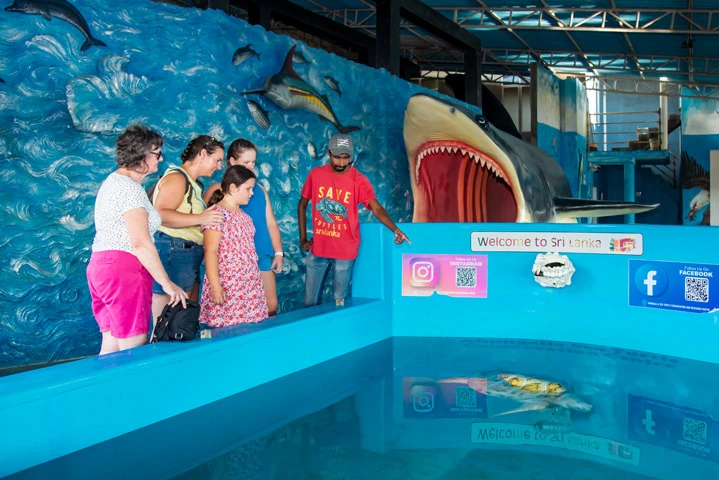
At the Ahungalla Sea Turtle Conservation & Research Centre, conservation work takes place every day throughout the year.
Beach Monitoring
Conservation staff regularly patrol nesting beaches to identify turtle tracks, locate nests and monitor nesting activity.
Nest Protection
When nests are threatened by predators, flooding or human disturbance, eggs may be carefully relocated to protected hatcheries where they can develop safely.
Turtle Rehabilitation
Injured turtles rescued by fishermen or members of the public receive veterinary care, rehabilitation and monitoring before being released back into the ocean whenever possible.
Research
Accurate scientific information helps conservationists understand population trends, nesting success, migration routes and the effectiveness of conservation programmes.
Education
Local schools, tourists and surrounding communities are encouraged to learn about marine conservation through educational programmes and awareness campaigns.
Creating awareness is one of the most effective long-term conservation strategies because informed communities are more likely to protect wildlife and marine habitats.
Community Partnerships
Successful conservation depends on local people.
Working together with fishermen, schools, tourism businesses and coastal communities creates sustainable conservation solutions that benefit both wildlife and local livelihoods.
Conservation Is a Shared Responsibility
Protecting sea turtles isn’t the responsibility of scientists alone. Every person can contribute by reducing plastic waste, supporting ethical wildlife tourism, protecting beaches and raising awareness about marine conservation.
Every positive action—no matter how small—helps ensure future generations will continue to see sea turtles nesting on Sri Lanka’s beaches.
What We Do at the Ahungalla Sea Turtle Conservation & Research Centre
The Ahungalla Sea Turtle Conservation & Research Centre works throughout the year to protect sea turtles along Sri Lanka’s southwest coastline through ethical, science-based conservation.
Every activity is guided by one principle: animal welfare always comes first.
Unlike attractions that prioritise entertainment, our project focuses on long-term conservation outcomes and responsible wildlife management.
Our Conservation Activities
- Beach patrols to monitor nesting activity.
- Protection and relocation of vulnerable nests.
- Operation of a protected sea turtle hatchery.
- Rehabilitation of injured and stranded turtles.
- Marine conservation education for visitors and schools.
- Scientific monitoring and long-term research.
- Shark awareness and marine ecosystem education.
Every rescued turtle, protected nest and educational programme contributes to healthier marine ecosystems for future generations. :contentReference[oaicite:0]{index=0}
Why Long-Term Scientific Data Matters
Successful conservation depends on reliable scientific information collected over many years.
At Ahungalla, conservation staff and volunteers record important information including:
- Nesting activity.
- Incubation temperatures.
- Hatchling emergence success.
- Health assessments of resident turtles.
- Human impacts on nesting beaches.
These records allow conservationists to monitor population trends, evaluate conservation success and identify emerging threats before they become serious problems.
Every volunteer who assists with data collection contributes to a dataset of genuine scientific value. :contentReference[oaicite:1]{index=1}
The Critical Role of Local Communities
No conservation project can succeed without the support of the people who live alongside the wildlife being protected.
The fishing communities of Sri Lanka’s southwest coast possess generations of knowledge about local marine conditions, seasonal changes and turtle behaviour.
Working together with these communities creates conservation solutions that benefit both wildlife and local livelihoods.
Community Partnerships Include:
- Reporting injured or stranded turtles.
- Reducing accidental turtle bycatch.
- Environmental education programmes.
- Responsible eco-tourism.
- Creating sustainable local employment.
By listening, collaborating and sharing knowledge, conservation becomes far more effective and sustainable. :contentReference[oaicite:2]{index=2}
How You Can Help Protect Sea Turtles
Every individual can make a difference. Conservation is not only the responsibility of scientists or conservation organisations.
Volunteer
Join a 1–18 week conservation programme and contribute directly to sea turtle protection through practical conservation work.
Donate
Financial contributions help support turtle rehabilitation, nest protection, research and environmental education programmes.
Visit Responsibly
Choose wildlife experiences that prioritise conservation and animal welfare instead of entertainment.
Spread Awareness
Share accurate information about sea turtle conservation with friends, schools and your community.
Reduce Plastic Pollution
- Use reusable water bottles.
- Avoid single-use plastics.
- Participate in beach clean-ups.
- Dispose of waste responsibly.
Small actions, when repeated by thousands of people, create meaningful conservation impact.
Why Conservation Matters
Sea turtles have survived for more than 100 million years, yet they now face unprecedented challenges caused by human activity.
Protecting nesting beaches, reducing marine pollution, supporting ethical conservation and educating future generations are all essential if these remarkable animals are to survive.
Conservation is not a single event—it is a continuous commitment requiring science, education, collaboration and public support.
Be Part of the Conservation Story
Whether you volunteer, donate, visit responsibly or simply share knowledge with others, every positive action contributes to protecting sea turtles and the marine ecosystems they depend on.
Together, we can help ensure that future generations will continue to witness sea turtles nesting on Sri Lanka’s beaches.
Get Involved Today
If you’re passionate about marine conservation and want to make a real difference, we’d love to welcome you to the Ahungalla Sea Turtle Conservation & Research Centre.
- ✔ Join our volunteer programme.
- ✔ Support conservation through donations.
- ✔ Visit responsibly and learn about sea turtle conservation.
- ✔ Help spread awareness about protecting our oceans.
Together, we can protect Sri Lanka’s sea turtles—one nest, one hatchling and one beach at a time.